Showing posts with label New Zealand. Show all posts

Trains, whales, wines and wild New Zealand scenery

The rail journey offered by Coastal Pacific was the longest railway construction project in New Zealand, starting in 1875. Prior to its completion, there was no direct train service that ran between Picton and Christchurch.

The Coastal Pacific train with coast on one side, snowy mountains on the other

I had been on a scenic railway tour in the south island of New Zealand before, but I had assumed that the massive death toll and destruction from the Christchurch earth quake in 2011 would have ended the Picton-Christchurch trip. As Anthony Dennis reported, however, the Coastal Pacific journey is up and running again, better than ever.

The Coastal Pacific train journey travels between the delightful port of Picton and Christchurch, the South Island’s largest city. This journey is a scenic feast of New Zealand, with the Kaikoura mountain ranges on one side of the train and the Pacific Ocean coast line on the other. The scenery along this rugged coastline is enjoyed via either the large panoramic windows in the normal carriages or an open air, breezy viewing carriage.

The Coastal Pacific train takes visitors through some of New Zealand’s finest horticultural and farmland areas, to see amazing wildlife such as dolphins, seals and penguins.


Whale watching in Kaikoura, on board the Tiki Touring boat

Along the way the train passes though Kaikoura. As far as I can see in the town’s web pages, Captain Robert Fyfe became Kaikoura's earliest European settler in 1843. He established Waiopuka, the first shore whaling station near where his house, built in 1860, can still be visited. Other whaling stations soon followed at South Bay, but after 1850, whale numbers steadily declined and the industry became uneconomic. Today all marine mammals are protected in New Zealand.

The town actively promotes itself a popular stop off for those passengers who choose to immerse themselves in the sheer drama and beauty of this place with its majestic alpine scenery, beautiful rugged coastline, Maori culture and amazing ocean wildlife. Visitors can and do break their journey to sail on the whale watching boats or to swim with the dolphins, literally.

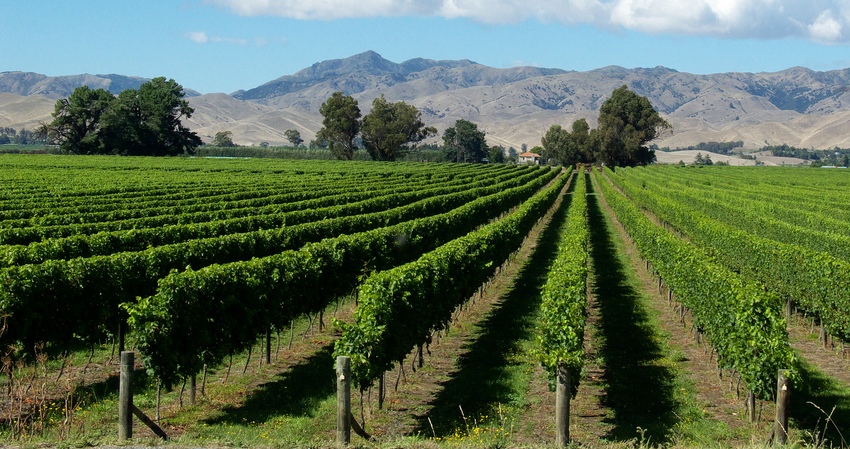
vineyards in Blenheim

Or jump off at Blenheim to see the Omaka Aviation Heritage Centre. Built around one of the world’s largest collections of original and replica World War 1 aircraft, the collection includes rare, crafted trench art, personal items belonging to the Red Baron and realistic scenes created for the Knights of the Sky exhibition.

The service runs in both directions between Christchurch and Picton daily, stopping enroute for passengers at Rangiora, Waipara, Mina, Kaikoura, Seddon and Blenheim. The trip takes 5 hours 20 minutes, one way, with new café cars to sample the local food and wine.

 New Zealand's South Island.
I have marked Picton, Blenheim, Kaikoura, Waipara, Rangiora and Christchurch

From May to September, KiwiRail’s Coastal Pacific train service between Christchurch and Picton will operate a reduced winter timetable i.e only on Fridays, Saturdays, Sundays and Mondays. So while winter scenery is more spectacular, summer is the most flexible time to travel.

Rural photography; seductive advertising

I don't approve of the advertising industry at all. It knowingly encourages conspicuous consumption, poor dietary habits in primary school children, sexual stereotyping, waste of the world's limited resources (plastic, packaging) and pollution. I rarely watch television that has paid ads, and I never listen to radio that accepts paid advertisements - only the ABC, BBC etc.

Now I have to admit that somewhere, sometime, somehow the advertising industry will hit pay dirt i.e they will find an image/sound/smell/taste that appeals to even the least receptive person. For me, it is this magazine advertisement for Montana wine from New Zealand.

Montana wine advertisement in an Australian women's magazine, 2009 (cropped)

The image presents a simple table in the open country side, with the sun slipping behind the distant hills at dusk. No humans, no animals, no cars, no buildings and no food. But the promise is of glorious scenery, fresh air, twenty of your closest friends, great food and wine, pure colours and no worries about your boss, your mortgage or apologising to the children's high school teachers.

Of course I understand that food doesn't simply appear on a table in a country field - a team of people would have to buy it, cook it in a tent, serve it to the guests and then clean up after. Nonetheless as a piece of visual art, the photographic image is well crafted. As a piece of clever advertising, it is very seductive.

Women's Institutes - "For Home and Country"

Women’s Institutes originated in Canada in 1897, as a direct result of the work done by a Mrs Adelaide Hoodless (1857-1910). Hoodless had been pushed into advocacy when her youngest son died in infancy after drinking impure milk. Along with farmers Erland and Janet Lee, Hoodless drafted the charter for the Women’s Institute movement and helped organise the first Institute at Squire’s Hall, in rural Stoney Creek, Ontario.

The 1897 meeting planned a path for the Federated Women’s Institutes across Canada. The women affiliated to the Farmer's Institute and actively pursued the support of the Minister of Agriculture. Government cooperation was important from the start of the organisation.

Erland and Janet Lee Museum, Hamilton, Canada.

In 1910 Mrs Hoodless made an appeal for a university faculty of Home Economics. Although she didn’t live long enough to see it, Hoodless had done the pioneer work for the founding of a Department of Household Science at Toronto University. She organised Household Science classes at the YWCA in Hamilton and persuaded the Province of Ontario to undertake a province-wide programme. She influenced Lord Strathcona to assist in financing the Ontario Normal School of Domestic Science and Arts in Hamilton in 1900. Mrs Hoodless convinced tobacco millionaire Sir William Macdonald to contribute financially to the establishment of Macdonald Institute, Guelph and to Macdonald College, Quebec.

In 1915 the Agricultural Organisation Society in Britain, under the Ministry of Agriculture, were looking to Canada to start a similar organisation in the heart of the British Empire. The object of the Agricultural Organisation Society was to organise farmers into co-operative societies for the purchase of agricultural requirements and for the sale of produce. So they invited a Mrs Madge Watt, who was visiting from Canada, to address them.

Clearly the British men saw the value of the Women’s Institute movement in war time, to get rural women working co-operatively and to increase food production. The first Institute in Great Britain was started that year in Llanfair PG in Wales. And the Scottish Women’s Rural Institutes soon became very popular as well.

From 1915 – 1917, the British Women’s Institutes adopted rules specifically based on the Canadian model and agreed that they would:
a) study home economics;
b) provide a centre for educational and social intercourse and for all local activities;
c) encourage home and local industries;
d) develop co-operative enterprises; and
e) stimulate interest in the agriculture industry.
From 1917-1919, under the Board of Agriculture, the same Women’s Institutes concentrated on food production to help the war effort.

Women's Institute meeting, 1920s

Two publications appeared in Britain. The Landswoman, shared with The Women's Land Army, appeared from 1917-1919. After 1919, a subscription magazine called Home and Country was published monthly.

How many women became members? The British membership is said to be 210,000 in any given year. Would that number have risen during the two world wars?

The idea of Women’s Institutes was first introduced to New Zealand by Miss Ann Spencer on her return from war work in England, where she had seen the organisation in action . In Feb 1921, in conjunction with Mrs Francis Hutchinson, Spencer formed the Rissington Women’s Institute in Hawkes Bay, and thence to the rest of the country. It is interesting to note that, whereas Institutes in other countries had received financial assistance from their Governments, the movement in New Zealand had been built up solely by the endeavours of the members themselves. A request in 1927 for government assistance was refused.

ANZAC Day Commemoration Committee noted that a number of women’s organisations in Australia became very active during WW1, including the Australian Women’s National League, Australian Red Cross, Country Women’s Association, Voluntary Aid Detachment, Australian Women’s Service Corps and the Women’s Peace Army. The trouble is, I can’t find any mention of a branch of the Country Women’s Association before the NSW branch was formed in 1922. It started at a Bushwomen's Conference held in conjunction with the Royal Agricultural Show in Sydney.

In its written history, this Australian branch tied itself back to the same Mrs Hoodless in Canada. But was there really any connection between Canadian, British, New Zealand and Australian country women? The CWA in Australia has generally been a  conservative organisation. Yet while the CWA in many ways defended traditional gender roles, it has occasionally been a progressive force - eg consider its encouragement of rural women to take an active part in public affairs or in environmental issues. As early as 1936, for example, the NSW branch passed a resolution in favour of equal pay for women.

In general, Canada, Britain, Australia and New Zealand all placed a strong emphasis on community service and personal growth for rural women. But I suppose each national federation of women’s institutes had its own priorities – one wanted a body that could support women in rural communities, a second might have wanted to build domestic science classes for female students and a third might have been mobilising women for war work. What they did NOT do was concentrate solely on baking fluffier scones or making more succulent orange marmalade.

The goals were best specified in the 1920s when the British women agreed “to improve and develop conditions of rural life; to give to all country women the opportunity of working together through the Women's Institute organisation; to provide for the fuller education of countrywomen in citizenship, in public questions both national and international, in music, drama and other cultural subjects; and to secure instruction and training in all branches of agriculture, handicrafts, domestic science, health and social welfare”. Clearly the important and shared role in every country was to reduce rural isolation, give women an opportunity to develop confidence in their views and to participate in relevant health, welfare and educational projects.


The Women's Institute, a history of the British movement written by Susan Cohen

Simon Goodenough wrote Jam and Jerusalem: A Pictorial History of the Women's Institute, published by Collins in 1977. Jane Robinson wrote A Force To Be Reckoned With: A History of the Women's Institute, published by Virago in 2011. The Women's Institute by Susan Cohen came from Shire Publications in 2011.

New Zealand's Nobel Prize winning hero: Ernest Rutherford

I don’t know the first thing about electro-magnetic waves, uranium radiation or atomic transmutation. But I did want to examine the life of the most famous of New Zealand’s three Nobel Prize winners.

Ernest Rutherford 1871–1937 was son of a farming family who had emigrated from Scotland to New Zealand for a healthier life style. Ernest was born at Brightwater, near Nelson, the fourth of their twelve children. He studied at the local school and then Nelson College and finally University of New Zealand. In 1895, after graduating and doing two years of research at the cutting edge of New Zealand’s electrical technology, Rutherford sailed for England on a scholarship. He did postgraduate study at the Cavendish Laboratory, Cambridge University during the years 1895–8.

At first Rutherford continued his research on magnetism, but the discovery of X-rays by Wilhelm Conrad Roentgen in November 1895 changed everything. In 1896, Rutherford was invited to share in the research on the induction of ionisation in gases by the Roentgen rays. During the investigation of radioactivity he coined the terms alpha and beta, to describe the two distinct types of radiation emitted by thorium and uranium.

In 1898 Rutherford was offered the chair of physics at McGill University in Montreal. At first Rutherford hesitated about accepting the offer, since he had already put down roots in one of the main centres of the scientific world. Montreal was much less famous. But the Physics Building at McGill had just been opened in 1893 and was one of the best equipped science buildings in the world. And the position offered was essentially a research post, important since Rutherford did not want to spend his days teaching and marking exam papers.

First Solvay Conference, Brussels, 1911

Rutherford never forgot his New Zealand origins. His fiancée, Mary Newton, was the daughter of his landlady at Christchurch in New Zealand. They were married there in 1900, then the honey-mooners returned to Canada.

It was during his nine years at McGill (1898-1907) that Rutherford published 69 papers, either alone or with one of his very fine young colleagues. Canada was very important in his career: the original work that he did at McGill was what later gained him the Nobel Prize in Chemistry 1908.

One of the best of his Montreal colleagues was the young English chemist Frederick Soddy who collaborated with Rutherford on research into the transmutation of elements. They worked together during the years 1900-3 although they probably didn’t realise that twenty years later, Soddy was going to win the Nobel Prize for Chemistry in 1921. It would be for his research in radioactive decay and particularly for his formulation of the theory of isotopes.

Anyhow Rutherford had demonstrated that radio-activity was the spontaneous disintegration of atoms. He noticed that a sample of radio-active material invariably took the same amount of time for half the sample to decay, its half-life. He created a practical application for this phenomenon using this constant rate of decay as a clock. This could then be used to help determine the actual age of the Earth which turned out to be much older than most of the scientists at the time believed.

In 1907 Rutherford took the chair of physics at the University of Manchester. There, along with German Hans Geiger and New Zealander Ernest Marsden, he did the experiments that revealed the nuclear nature of atoms. It was his interpretation of these experiments that led him to the Rutherford Model of the atom having a very small positively charged nucleus orbited by electrons.

A photo from the First Solvay Conference, the first world physics conference held in Brussels in 1911, became something of a legend. Three people will immediately be visible in this photo above: Marie Curie (seated), Ernest Rutherford (standing, 4th from right) and Albert Einstein (standing, 2nd from right). For a complete list of attendees, see Wikipedia. Rutherford was certainly clever, but he was also surrounded by equally clever minds.

Rutherford was knighted in 1914 and spent a long holiday back in New Zealand with his parents and siblings. In 1919 and 1924 he again did long tours of New Zealand, now a world famous scientist. Wherever he went, cities and towns put on civic receptions with packed crowds to listen to illustrated lectures on his work.

Straight after WW1 ended, he returned to the Cavendish as Director. Rutherford became the first person in 1919 to transmute one element into another when he converted nitrogen into oxygen via a nuclear reaction. In 1921 Rutherford worked with Niels Bohr 1885–1962 who postulated that electrons moved in specific orbits. Rutherford theorised about the existence of neutrons, which could somehow compensate for the repelling effect of the positive charges of protons by causing an attractive nuclear force and thus keeping the nuclei from breaking apart.

Bohr was a Danish physicist who made fundamental contributions to understanding atomic structure and quantum mechanics, for which he received the Nobel Prize in Physics in 1922. Bohr mentored and collaborated with many of the top physicists then at his Copenhagen institute. So to be complete, we should really examine the lives of the other brilliant scientists at Cavendish, to see how they interacted with and influenced Rutherford. After all, he didn’t win his Nobel Prize in a vacuum – four of his students and colleagues went on to win their own Nobel Prize.

New Zealand currency, honouring Rutherford

Rutherford was admitted to the Order of Merit in 1925 and in 1931 was raised to the peerage via a new creation, Baron Rutherford of Nelson, of Cambridge. The title was chosen to honour his New Zealand origins, as did his coat of arms which included a kiwi and a Maori warrior. Baron Rutherford died in 1937 and was buried in Westminster Abbey, surrounded by other great scientific heroes.

The Rutherfords' only child, Eileen, married a mathematical physicist at the Cavendish Laboratory called Ralph Fowler. Alas she died tragically young in 1930.

My main references for scientific information were Rutherford - A Brief Biography by John Campbell and Ernest Rutherford's Life.

The 1930s: a tragic, hopeful decade

In the past I have not been particularly fascinated by history of the mid C20th and thought I would not enjoy the book The Thirties: an Intimate History by Juliet Gardiner (Harper Press, 2010).

The book, published 2010

But it turns out that the topic is riveting. This is a history of workers and families. It is also, as Francis Beckett noted, the story of kings and prime ministers, industrial moguls and trade union leaders, but talking of the Great and the Good is relevant only insofar as they changed the way the people lived.

Juliet Gardiner explained her own method of historical analysis. She used interviews, diaries, letters and privately published memoirs, deposited in local archives. She wanted to explore how people did their shopping, decorated their homes, understood modernism, constructed their sexuality, suffered at the hands of authorities, roamed abroad for employment opportunities, embraced anti-Semitism, took their first paid holidays, were very attracted to fresh air, lidos, rambling and improved rights for women.

The first thing to say is that misery did not arrive, suddenly, with the Depression. The 20s were not a uninterrupted time of cocktail parties, charleston dances, glorious cruise ships and diamond-encrusted cigarette holders for everyone.

David Lloyd George's government did introduce a programme of social reform in the 1920s. The Education Act raised the school leaving age to 14. The Housing and Town Planning Act provided subsides for house building by local authorities and some 170,000 homes were built under this Act. The Unemployment Insurance Act extended national insurance to 11 million additional workers. But the soldiers who had expected to find a land fit for heroes, after 1919, came home to unemployment, strikes and substantial cuts to public expenditure.

Now the Depression. In 1931 the collapse of Austria’s Credit-Anstalt had plunged the banking system and therefore the economy into chaos; in Britain, the May Committee had foreseen a tragic budget deficit of £120 million and recommended painful spending cuts. I don’t suppose people were having a good time anywhere. In the depths of the Great Depression, unemployment was high and men could not look after their families. Lining up in front of soup kitchens or applying for Sustenance must have been utterly humiliating. Banks, businessmen and politicians didn’t seem to be able to suggest a way out of personal, national or global depression, as Dominic Sandbrook pointed out.

wretched unemployment, early 1930s

In Britain, if ordinary families thought that the Labour Party would look after their interests, they were to be sadly disappointed. The most intellectual and idealistic of the Labour members moved over to the Communist Party but nothing came of it. I wonder if it is true that the Labour leadership opposed hunger marches because they had been organised by Communists. Certainly well-meaning men and women couldn’t agree on goals or strategies, and could hardly agree on international role models.

My own family in Australia became more and more politically active, including getting involved in the Spanish Civil War. But in the end, they too were disillusioned.

Mosley, Fascist parade, London 1936

The book refers to a Britain in which the King played a central part in affairs of state and members of Parliament had a powerful sense of national duty. I presume the same could be said for Australia and New Zealand. So it does not surprise the reader that the Thirties was also the decade of the car, Californian bungalows, suburban picture theatres, public swimming pools, dance halls where young men and women could meet their future spouses, Art Deco and family holidays near the beach. The greatest advance of all, most likely, was having toilets brought into homes, rather than remaining as out-houses. This bizarre decade was an age of self-conscious modernity, too early for affluence but heading in that direction.

The difference was that Britain was a nation very deeply divided by class and region, and yet united by a moral consensus that has long since evaporated. Australia and New Zealand might not have been quite as united by a moral consensus, but then we weren’t as divided by class and region either. Another thing that occurs to me. We may have had anti-Semitism and anti-foreigner sentiment here in the Antipodes, but I don't think Australia and New Zealand had large, organised Fascist parties as Britain did.

1930s Deco cinema, Plymouth

There are some British elements that I, as an Australian, cannot know from personal experience or from my parents’ stories. Lara Feigel talks about how, after Edward VIII's abdication, George VI seemed very reluctant to take the throne. The 1936 Crystal Palace fire apparently represented a loss of connection with the glorious days of Victoria and Albert, and a move towards world conflagration. Woolworths, reportedly a hopeful emblem of democracy, opened dozens of new shops in 1937 alone. [Why Woolworths represented democracy in the 1930s is not clear to me in 2010].

Family holiday, Weston Super Mare, 1930s

So the 1930s was a more tricky decade than I imagined. Even after the worst of the Great Depression was over, the poor and unemployed often remained poor and unemployed. The rest of us, meanwhile, got on with annual holidays at the beach, Saturday night at the pictures and a second-hand family car. And the very wealthy planned trips on the truly magnificent Queen Mary liner that was launched in 1936. Only academics and intellectuals were writing about a new and better world for the future.
Related Posts Plugin for WordPress, Blogger...